
Classic Buttery Scones!

*This post may contain affiliate links. Please see my disclosure for more details!*
Classic buttery scones that are delicious for afternoon tea, a delicious treat, or something simple.
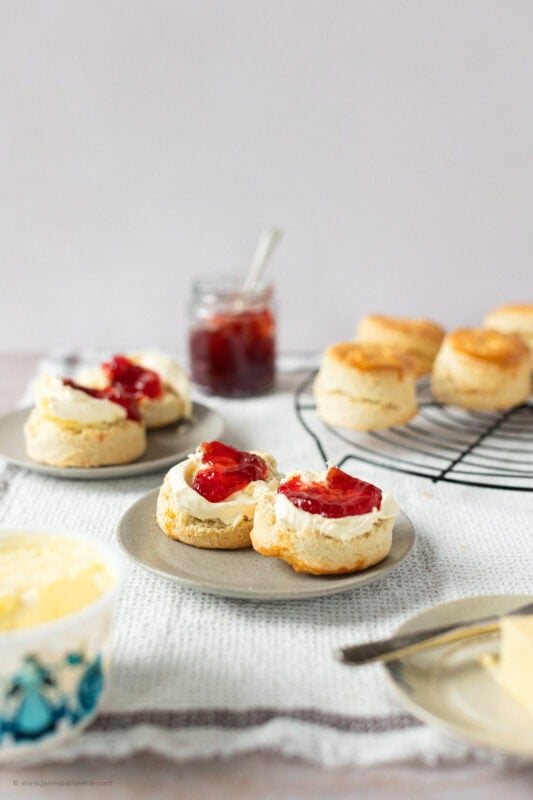
Scones
Scones are always my favourite treat in the summer, and when I go out for afternoon tea and cream tea. SO delicious and tasty. And I don’t know who I am trying to kid, I love them all year round and at any time I bake them. They are so simple yet so tasty, you cant beat a scone with cream and jam and a big pot of tea – right?!
They are probably one of the most famous and yet delicious classic bakes in Britain, right? Sometimes they have a different name in other areas of the world, such as biscuits, but often they are sweet bakes here, often served with a cup of tea (cream tea, anyone?).
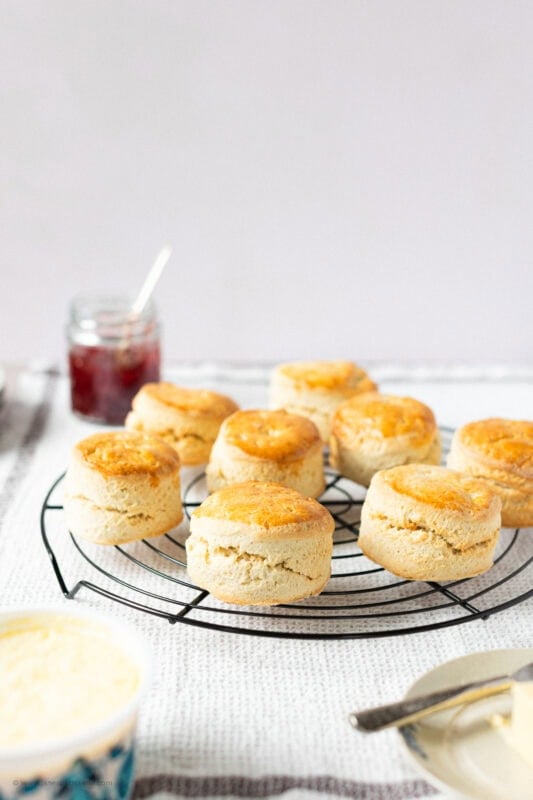
Classic scones
The wonderful thing about such a thing as this is that you can create so many different flavours – whether they are savoury or sweet. Therefore I decided to start off with a basic and buttery simple sweet scone so you can try to adapt it yourself, or you know you can follow this recipe to have a basic scone.
- Butter – it’s important to use a block butter for a scone for the best bake and taste
- Flour – I tend to use self raising flour, instead of plain, but you can use plain flour and total the baking powder to two teaspoons instead
- Baking powder – I like to add a little baking powder still, even with self raising flour, but it is totally optional
- Sugar – you want to add the sugar for a sweet scone, and typically I use caster sugar for a basic recipe but golden caster sugar works well, also.
- Salt – the salt helps with the flavour of the scone and the bake overall, but is optional
- Milk – I will always recommend a full-fat milk for the best results
- Lemon – the lemon juice to almost create it’s own buttermilk in the scone mix
- Vanilla – A little vanilla extract for flavour
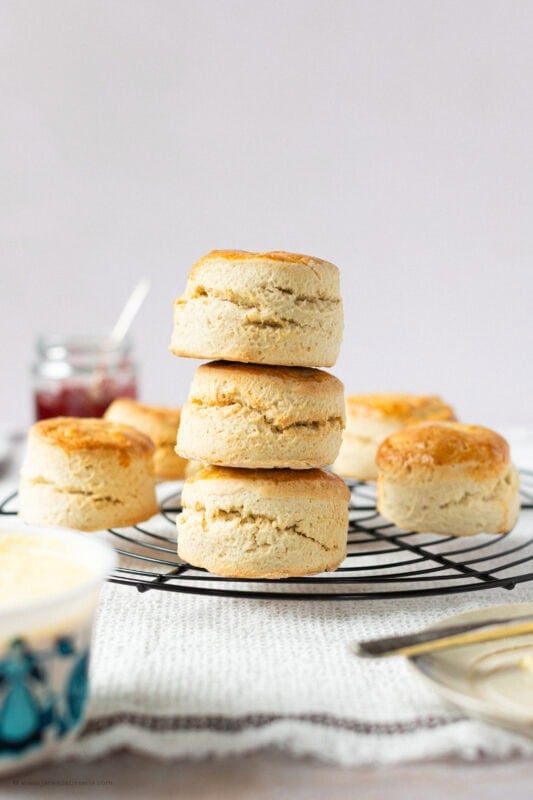
Milk vs Buttermilk
There is a lot of debate on milk, vs buttermilk. This recipe essentially creates it’s own buttermilk in the dough with the use of the milk and the lemon juice. I tend to use full-fat milk, that is warmed, to create the dough. I then also add in the lemon juice for the rise of the scones.
If you want to use buttermilk, you totally can, just don’t heat it up – you can skip this bit. You also don’t really have to warm the milk up, but I find it works wonders in the dough and makes them easier to create. I will say that sometimes, you don’t need all of the milk.
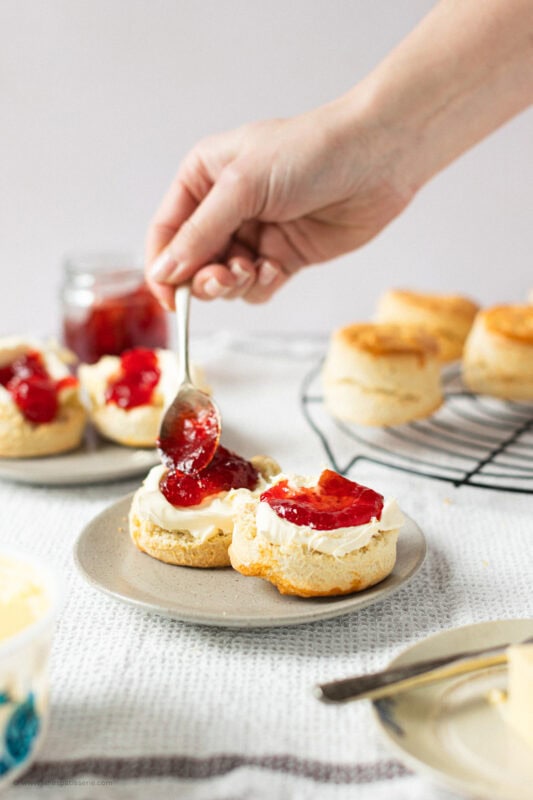
Making the scones
If you are using a food processor, these are super easy to make. You add the butter, cold and cubed, into the food processor with the flour, baking powder, sugar and salt. Pulse this together to a breadcrumb texture. I then add in the lemon and vanilla and mix, slowly adding the milk until the dough comes together.
If you are making the scones by hand, you add the butter, flour, baking powder, sugar and salt to a bowl and rub the ingredients together with your fingertips until it resembles breadcrumbs. Add the vanilla, lemon and milk again and knead with a spatula and then your hands until the dough comes together.
Sometimes, you don’t need all of the milk, which is why there is a range on the recipe. I tend to add 100ml worth, and then add more if I need to. It’s worth saying that with scones, you really don’t want to overwork the dough if you can help it, so the smaller amount of mixing, the better.
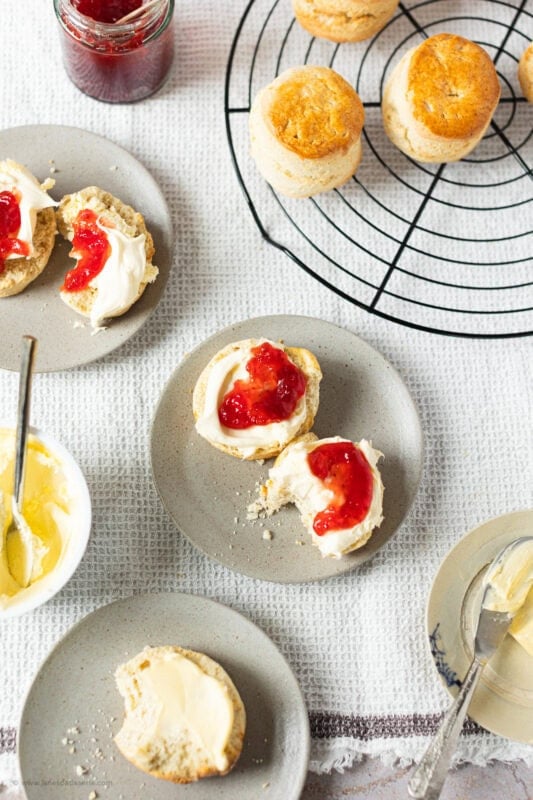
Shaping the scones
I find it best to tip the scone mix onto a lightly floured surface, and then simply press the dough down lightly with my hands. If you ever struggle to shape your scones or find they don’t rise, it’s often because of overworked dough, or you have compressed them too much whilst rolling them out, so using the patting method works well.
With the cutter of choice, I use this cutter, you want to make sure they are floured well, and that you press directly downwards and don’t twist the cutter. If you twist the cutter, you can cause an issue with the rise of the scones or make them deform as you bake. Another option, is to pay the dough into a round shape, and simply cut them into triangles like pizza slices instead.
I tend to brush the top of the scones with egg wash (which is just egg, beaten in a bowl) to give a gloriously golden top to the scones.
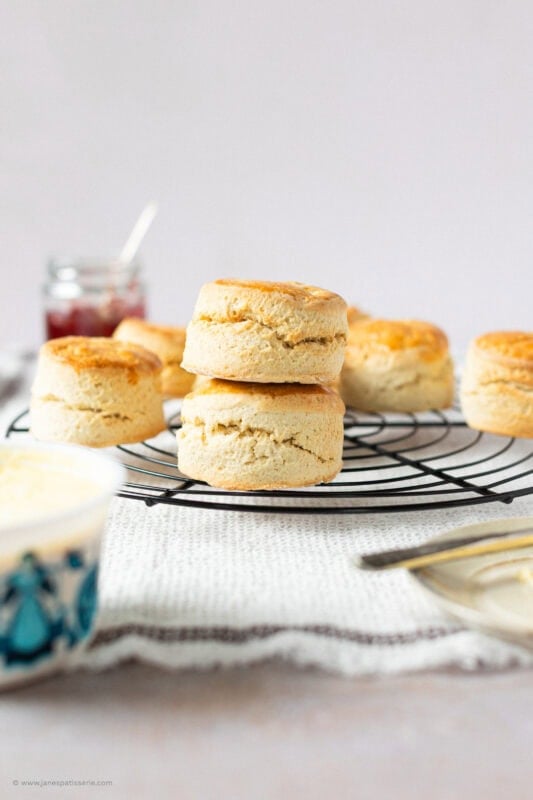
Flavours
My white chocolate & cranberry scones has always been a popular one, but in my honest opinion? You can’t beat a scone that’s fresh out of the oven with some clotted cream and strawberry jam. It is DELICIOUS and its my favourite.
I have made lemon and blueberry scones, savoury cheese scones and even just the classic fruit scones. You can add chocolate to the mix, you can add spices – the possibilities are endless, but they all need a good base recipe like this one.
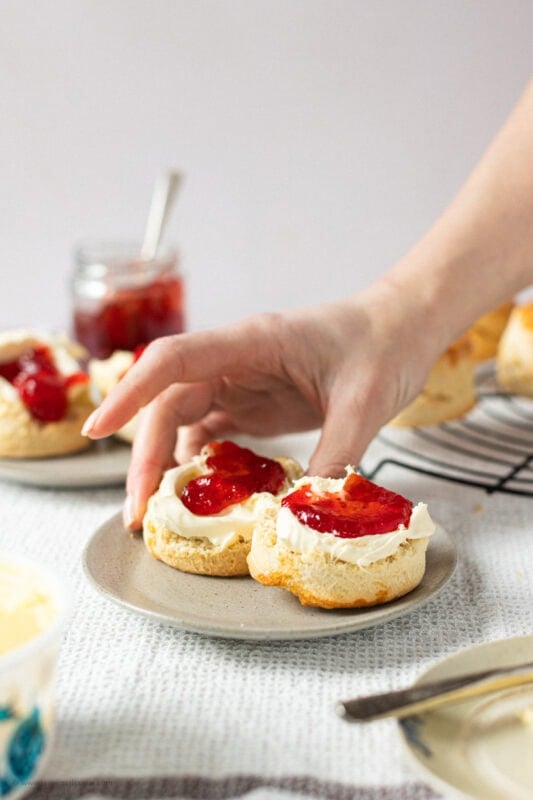
Cream then jam vs jam then cream
As I went to school in Devon, but I holidayed in Cornwall, I try to settle all battles by halving my scones and one half being cream then jam, and the other being jam then cream.. honestly, you will never be able to stop the battle – but either way they are amazing.
These buttery scones make a great staple for a homemade afternoon tea – YUM! Afternoon tea is a wonderful thing – sandwiches, cake and scones all in one sitting, you have the best of everything! I tend to use this recipe for my homemade afternoon tea, paired with my quiche recipe, salted caramel macarons and my yummy carrot cake – pass me a plate.
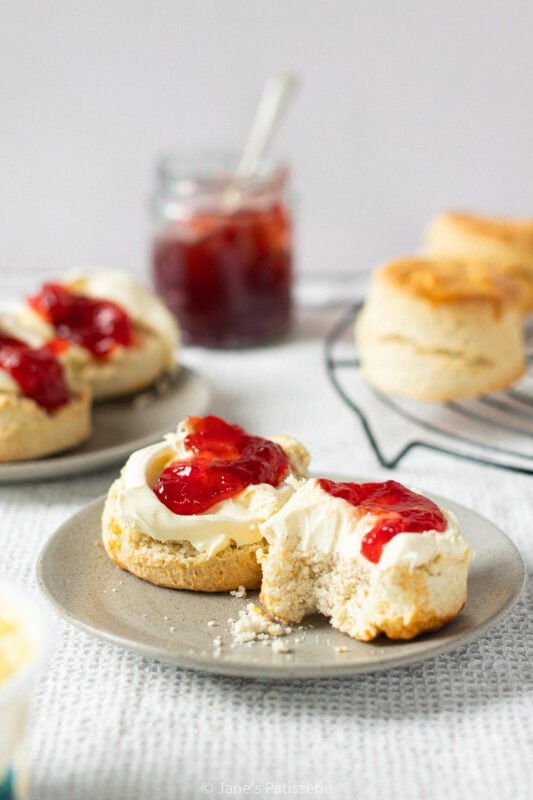
Tips & tricks
- You could easily make this mix and use a smaller cutter so that the scones are more delicate which I often do – I then usually get 12 out of the mix then
- I often find these are delicious when still warm as it makes them lighter and fluffier – however they do last in an airtight container for 2-3 days
- I shape with this scone cutter
- I serve with a strawberry/raspberry jam, and Rodda’s clotted cream
- You can use plain flour, and use 2tsps baking powder instead
- You can swap the milk and lemon juice for buttermilk – skip the heating stage and just add it to the dough
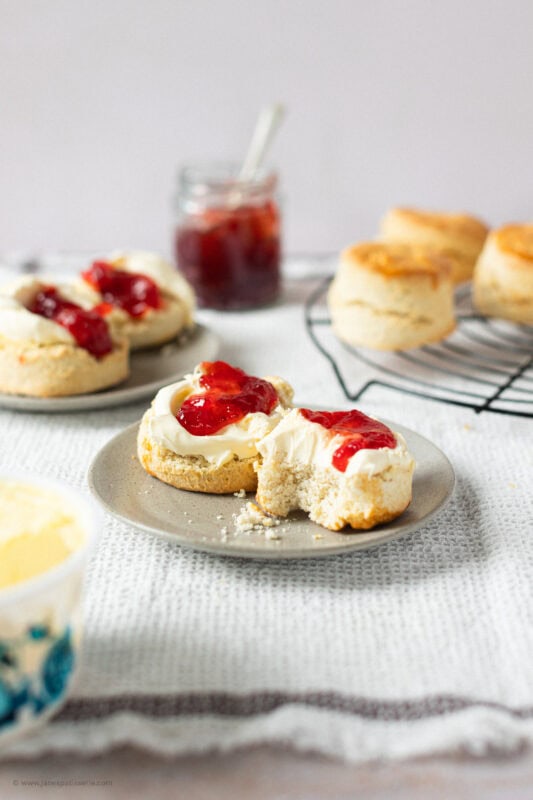

Classic Buttery Scones!
Ingredients
- 100 g unsalted butter (cold/cubed) (not baking spread)
- 1 tsp baking powder (optional)
- 1/4 tsp salt
- 350 g self raising flour (plus extra for dusting)
- 50 g caster sugar
- 1 tsp vanilla extract
- 1 tsp lemon juice
- 100-150 ml whole milk (warm)
- 1 egg (to glaze)
To Serve (optional)
- jam any flavour!
- clotted cream
Instructions
- Heat the oven to 220ºc/200ºc fan/430F and place a lined baking tray in the oven to preheat.
- In a large bowl, rub the butter into the flour, salt, baking powder and sugar mixture until breadcrumbs are formed.
- Alternatively, tip the flour, salt, baking powder, sugar and butter into a food processor and pulse until it resembles bread crumbs
- Add the lemon juice to the dry mixture with the vanilla
- Slowly add the warm milk. Mix in while you add in the liquid as you may not need all of it (I often only use 100ml or so)
- Dust the work surface with some flour and tip the dough onto it - fold the dough over a few times so it is smooth but do not over work it!
- Roll the dough out until it is about 4-5cm thick.
- Dip a 5cm round cutter into the spare flour and cut out the scones - you will probably get four out of the first go. Repeat this again till you finish up all the dough.
- Take the tray out of the oven carefully and place the scones onto it - brush the tops with the beaten egg so its glazed and bake in the oven for 10 minutes - leave to cool slightly when baked.
- Serve with clotted cream and jam for the stereotypical deliciously yummy scone!
Notes
- You could easily make this mix and use a smaller cutter so that the scones are more delicate which I often do - I then usually get 12 out of the mix then
- I often find these are delicious when still warm as it makes them lighter and fluffier - however they do last in an airtight container for 2-3 days
- I serve with a strawberry/raspberry jam, and Rodda's clotted cream
- You can use plain flour, and use 2tsps baking powder instead
- You can swap the milk and lemon juice for buttermilk - skip the heating stage and just add it to the dough
In the BBC recipe they don’t use baking powder – does it make that much difference to the rise? These are great scones whatever – may try adding next time and see the difference. Being from Cornwall it obviously has to be “jam first”
I much prefer it with the baking powder – I find it gives a lighter and nicer texture! And yess, always jam first!!
Nice and easy recipe! These were delicious! Thanks
Hi Jane,
Is there any way of making this recipe gluten free? I have both Gluten free self raising flour and gluten free baking powder? Thank you!
Theoretically it’s a straight switch – sometimes different flours can make a mixture wetter or drier, so if it’s either way add more liquid or more flour to compensate!
Hi Jane, how important is the lemon juice? I have all the ingredients apart from lemon. Is there a substitute or could I leave it out at all? Thank you x
The lemon juice helps create a ‘buttermilk’ which gets the best texture. Without, they may not be quite as good! x
Would it also be good if I use gluten-free flour? Thank you!
Sometimes that can make things a bit crumbly, so personally I’d add in some xantham gum as well, and then it’ll be fine!
Hi, I’ve had mine in the oven for 15 mins and they still aren’t cooked in the middle, have I done something wrong 😩
Thanks
They may be deeper/larger than mine – but they will continue to bake somewhat when cooling! x
Going to make these on Friday (never made scones before and VE Day seems the perfect opportunity). However, I’d like to make 12 without doing them smaller. Would it be okay to just do 1.5 of all the ingredients and do it as one larger batch? Thanks in advance!
Yes that would be fine!!
Super tasty!! Had no whole milk so used semi skimmed but still tasted amazing.
Absolutely love all your recipes!
This was such an easy recipe to throw together! The scones were light fluffy and buttery everyone loved them. They also stored well. I’d definitely recommend this recipe!
Could you add raspberry and white chocolate to this recipe? If so, what quantities would you suggest?
Thanks in advance xx
Hi Jane,
Can you use buttermilk instead of whole milk?
Yes that should be fine! Leave out the lemon juice from the recipe.
Hi there, I made these scones last night and they are delicious! The recipe was so easy to follow.
How much calories is in one scone?
I don’t know I’m afraid.
Put all the ingredients into MyFitnessPal and it will work out the calories for you 🙂
Hi I was going to make these scones today but only have semi skimmed milk can I use this instead of whole milk? Thank you
I really would recommend whole milk in baking in general ask it just leads to a better bake, but it should be fine.
My 5yo Grandaughter made these with my help, 5 mins into the clean up I realised we hadn’t added the sugar 🙀 No point worrying, it was too late. We still filled them with jam and clotted cream, and to my surprise were still delicious. Winner all round!
I adore these scones. This recipe has never failed me!
Even my 80 year old grandfather who has been baking since he was a young boy was incredibly impressed with how soft and light they were.
Perfect recipe!
Awh thats amazing!!